Wednesday, 15 March 2017

A National Park Dedicated to Emperor Ashoka and Buddhism


Siddharth Gauri has spent 6 yrs to turn into reality this park dedicated to the emperor—greatest of all Buddhist proponents


When Siddharth Gauri conceived a project in 2010 to build a national park dedicated to Ashoka and Buddhism, he expected it to be a smooth sail. After all, no Indian ruler, in his zeal to propagate Buddhism, was more instrumental and successful in spreading Indian influence abroad than Ashoka. But after having spent more than six years and convincing an entire village to forsake land for an Ashokan edicts park, it seems a distant dream owing to political indecision, ideological hassles and bureaucratic stalling.

“My family and friends often ask why am I wasting my life pursuing a non-starter,” says Gauri, who runs the NGO Buddhist Forum.


But Gauri isn’t the kinds to give up. “I was born in Yamunanagar, and when I came to know of its rich Buddhist heritage, I got excited. The idea of a park came subsequently,” says Gauri, who convinced the sarpanch and the villagers of Topra Kalan Panchayat in Haryana’s Yamunanagar district, about 200km from Delhi, to earmark 10 acres of land for the park in March 2011.

In the same year, the Gram Panchayat of the nondescript village passed a resolution demanding the Ashoka Pillar that had stood in this village for 1,500 years before being uprooted and installed at Feroz Shah Kotla in Delhi at the behest of Delhi Sultan Firoz Shah Tughlaq in the 14th century, be returned.

It is for this proud legacy that the villagers willingly gave up land for the proposed park. “We want development to come to the village. A national park will create new employment avenues,” says Suresh Panjeta, former Sarpanch of the village.

The link to Ashoka isn’t restricted to one village; 20km from Topra Kalan, in Chaneti village, lies an Ashokan era stupa, which was renovated by the Archaeological Survey of India in 2010. And Buddha himself visited here. His greatest discourses, such as the Mahasatipatthana Sutta, which explains Vipassana meditation, were delivered in Haryana, and there are multiple references to his wanderings in ‘Kuru Pradesh’.

Different teams comprising of members from Yamunanagar Chapter along with professionals & experts are working on their respective projects under supervision & guidance by the Chapter Central Committee.
“This would make Haryana an important stop in the Centre’s proposed Buddhist circuit,” says Gauri, who isn’t a Buddhist but wields the Right to Information Act to document government efforts to conserve ancient Buddhist monuments.

My mother, a Christian who married into a Hindu family, named me Siddhartha and this triggered my interest in the Buddha. I did not feel the need to convert to Buddhism because even the Buddha asked others to practice his teachings,” offers the 32-year-old.

Despite showing interest in the proposed national park, successive state governments have failed to take the plan forward, says Gauri. On the previous BS Hooda government’s prodding, he had prepared a project report for an Ashokan Edicts Park (see box). His hopes shot up when the Panchayat upped its land allotment offer to 28 acres and Haryana Chief Minister ML Khattar announced a Rs50 crore grant for the park in April 2015.

“But since then, we have had several meetings, files have been opened, but nothing has moved,” says Gauri. “In one meeting, an official wondered why we should celebrate Ashoka who changed India’s character and made a virtue out of non-violence. I had to convince him that no one, after or before, Ashoka succeeded in disseminating Indian culture to the rest of Asia, making him unique.”

Local Member of Parliament Rattan Lal Kataria raised the issue in Parliament, following which, Culture Minister Mahesh Sharma responded in April 2015 that the Centre was waiting for the Haryana Tourism Ministry to approve the project.

Ven. Karma Yeshe visit the park site
Captain Bhupinder, officer on special duty to Khattar, and one of the officials keen to jumpstart the project, says the state government recognises the proposed park’s tourism potential. “The chief minister wants this project to be implemented. But there are technical issues, such as the appointment of architects, and considerable financial expenditure,” says Captain Bhupinder.

In his quest to get things done, Gauri has opened another front. He has been approaching embassies of nations with a Buddhist tradition like Japan and South Korea to fund the project.

“There is realisation that a public-private partnership may be needed to bankroll this project. These countries have evinced interest but they want the government to steer the project rather than an NGO,” says Gauri, who soldiers on in the hope that Buddhism and Ashoka will find fresh acceptance in the land of their nativity.

A puja being performed at the site of Asoka Edicts Park at Topra Kalan village in Yamunanagar district.


PROPOSED PLAN
28 acres of land has been proposed in Topra Kalan, Yamunanagar in Haryana

It will have replicas of Ashokan pillars and rock edicts, a statue of Ashoka and a sapling of the Jaya Sri Maha Bodhi tree from Sri Lanka

A museum and a monastery would also be built within the park premises

Initial project estimate pegged at Rs 29 crore

Tuesday, 7 March 2017

Attaining Enlightenment - a New Paradigm

by David Jarry 


I will speak to you a little shovel of what is, or what is not enlightenment. Many wonder about this (rightly or wrongly), and struggle to find even an initial response. 

First of all, enlightenment is not enlightenment. These are two different things. 

Awakening is a different state of consciousness, close to the very young child, which offers a fresh, complete look at the world. To describe it is a challenge, for it goes beyond intellectual understanding, and to define it with words is therefore impossible. Words err, more than they guide, when they try to reveal something beyond the understanding. One could say that awakening is a state in which one is connected to everything, one feels everything, And we know that we are part of this whole ... without intellectually conceiving it. 


Paradoxically, is not it? In fact, we could talk about "real knowledge". In life, we know nothing. The human being is born and dies without knowing anything. But in awakening, the part of us that knows, is there, it communicates with us, and we know ... truly. 

Awakening is not something that is constant, nor is it acquired. One can attain enlightenment, and lose it in the next minute. One can be awake seconds, minutes, hours, days, weeks, months, or even years, and suddenly no longer be. It is a little like joy, one experiences it randomly, one moment one is joyous, and that after it is no longer joyous. You can not really order this, but you can afford a life environment that encourages the emergence of joy. The same is true for awakening

A spiritual, serene life, close to nature, is more inclined to trigger in us the state of awakening. 

How to achieve awakening? Start by abandoning his search! Indeed, he who seeks awakening finds it only when he abandons. 

It is an approach that seeks to stop seeking to do one thing, to allow this thing to be done. 

In Chan, and Zen Buddhism, meditation is practiced without object or motive. This is the reason why many currents practice it against the wall. One does not meditate to attain enlightenment or enlightenment, one meditates, that is all. 

He who meditates to attain enlightenment totally misses the goal. 

The one who looks at the top of the mountain when he begins to climb it, is breathless from the first steps, and sees nothing of the landscape, nor of the rock in which he is going to take his feet. While he who looks at the path on which he is, and what surrounds him, without seeking to know where he is going, that one takes advantage of the landscape, avoids the pitfalls, And actually goes somewhere. For those who would like to have arrived, the path seems too long, for the one who takes advantage of the road, the latter seems very short. 

This is one of the meanings of "Here and Now" in Buddhism. We must have consciousness where we are and when we are. 

A Zen tale offers us a superb metaphor on this subject. In Japanese, the awakening is called "Satori". 

  • One day a woodcutter heard of a rare and legendary animal called Satori. All the hunters asserted that one who would catch one, alive or dead, would be a true hero. Our woodcutter wanted to know more, and asked "where do we find such an animal?" He was told that he was found everywhere, It was so hard to see and catch, that it was lost. Returning to his forest to cut wood, he could not remove Satori from the head, he wanted to see this animal at all costs, and catch it. 
  • Decided, he began to search the woods, discreetly, to find a trace of Satori. Every day he spent considerable time looking for him, but to no avail. One day, however, he heard a mocking laugh in the foliage, and a mischievous voice said to him: "You must be mad or naive if you think that one day you will catch me!" The woodcutter immediately recognized Satori, and decided to redouble his efforts, but nothing was done. He built traps, he tried to make noise to frighten Satori and push him to make a mistake in his haste, On the contrary, he tried to hide for hours, to scrutinize the undergrowth. 
  • Nothing to do, not only did he not see Satori, but the latter had taken the habit of making fun of the woodcutter : "Did you really think that a trap so rudimentary would suffice to catch me?" As time passed, the lumberjack despaired. But what worried him the most was that he had left his work to be abandoned, and that the cold days would soon arrive. He was obliged to resolve to cut wood again, but Satori harassed him, making his work difficult. 
  • Every time he tried to work, Satori said to her:  "Come on, you're not going to look for me today? Where it came from, and he found something stuck under the tree. He moved the trunk, and was struck with astonishment: it was Satori! 


In general, we have all experienced enlightenment at least once. As a child, we were close to this state. Sometimes, when we are absorbed by our work, or by one of our actions, that we are just present, and conscious, a few seconds of awakening come to enlighten us. 


When it is so short, it is hard to realize that something has happened. One felt "strange", one has the impression of having dizzy, or that for a moment one was like the spectator of the life, and even spectator of oneself. As if we were watching all this from "away". We say that " We have not slept enough, and we forget. Yet this was perhaps a fragment of awakening that was offered to us. 


To attain enlightenment is to be present here, and now to be conscious, to be what we do. It is not to seek awakening. It is to do, not to seek to do. It is living a healthy life, eating healthy food. 


Achieving awakening can be done by anyone, in any situation. Healthy or sick, hungry, fit or tired, in meditation or at work, in full effort or at rest, in nature or in prison ... but a more serene, calmer, more posed life, more Healthy, and more natural, promotes the emergence of awakening, which then tends to manifest itself spontaneously, more often, And longer. The frequency, intensity, and duration of arousal could almost be a "measuring device", an indicator of the quality of our lives. There is nothing surprising that monks cultivating their land, eating good wholesome, close to nature and serene could speak of concepts such enlightenment more eloquently than anyone of 'other. Their living conditions favored this experience. 

Awakening allows us to see more things, to understand things, inside oneself, without the intellect, without thinking. It allows us to memorize what we see, to fix it in our soul, in our mind, as a pure crystal. These memories are then, once awakened, Like those of a distant dream. One has the impression that these memories are unreal, but paradoxically, they are of a clarity, and a precision out of the ordinary. Sometimes we get the impression that it is the memories of someone else that have been communicated to us. It is because these memories belong to a part of us that is beyond our ordinary consciousness. These are the memories of our being closer to what is divine. 

What is enlightenment then, 

  • It is the state of being that is healthy. 
  • It is the child who learns a language to perfection in just a few months. 
  • It is the spark in the eyes of this child when he sees a tree, or an animal. 
  • It is the opening of oneself to oneself. Awakening is our intellect which is effaced for the benefit of our soul. 
  • It is the adult who sleeps while the child observes the stars. 
  • It is the reflection of the moon on a sea of oil. 


How to achieve awakening? By not seeking it, and being just present, here, and now. 

As the "New Ageux" say: by letting go. By not seeking to act, nor by seeking not to act. Strange paradox ... do not try to do something, and do not try not to do this thing. Accept that Nature is incomprehensible, for beyond the intellect, and let it do. To follow it, to live it, quite simply. The awakening is non-dual, it is beyond the manifestation of experience. The awakening is so simple that we can not understand it.

Tuesday, 7 February 2017

Hоw Does Thе Mind Benefit From Meditation?


Our mіnd саn bе vеrу соmрlісаtеd structures thаt nееd tеndеr loving саrе. 

Bу over thіnkіng, and оvеr analyzing аnd wоrrуіng tоо much, wе саn blow our mеntаl fuѕе all tоо оftеn. Obvіоuѕlу not letting thе mіnd gо into оvеr tіmе wоuld bе іdеаl, hоwеvеr not many оf us wеrе taught how tо tame thе mіnd. Wе do knоw bеttеr tоdау, and thе tооlѕ are available іf wе оnlу lооk around. 

Would уоu like tо rеlаx thе mind? Start Mеdіtаtіng. As ѕооn аѕ I put mуѕеlf dоwn іntо my Mеdіtаtіоn chair, сlоѕе mу еуеѕ and tаkе thе fіrѕt fеw breaths, I саn feel a dіffеrеnсе. 

Rеlаxаtіоn 


A lіght meditative ѕtаtе is саllеd alpha lеvеl. The mіnd ѕlоwѕ dоwn it's busy wоrk, all it's excess thіnkіng, and саn now rеlаx. It is harder tо wоrrу and stay tеnѕе іn this state. 

Oxygenation 


Brеаthіng while іn a relaxed mеdіtаtіvе state іnсrеаѕеѕ the oxygen levels tо thе brаіn. Therefore, thе brаіn cells are being fеd mоrе of what they nееd, аnd саn funсtіоn оn a hіghеr lеvеl. Yоur brаіn роwеr becomes sharper, уоu become mоrе alert, and can fосuѕ more ԛuісklу. 


Rеjuvеnаtіоn 

I аm not ѕреаkіng of the bоdу but оf thе mind. Thеrе is аn awful lоt оf information ѕtоrеd ѕоmеwhеrе іn the mіnd, basically everything wе have еvеr lеаrn hеаrd, оr seen. Wouldn't іt bе nісе іf аll thаt соuld соmе up whеnеvеr wе need іt? Surрrіѕіnglу іt can. Whеn we сluttеr оur closets аnd drаwеrѕ, іt'ѕ impossible tо fіnd whаt wе need when we nееd іt. It іѕ ѕіmіlаr wіth thе mind. Cluttеr іn thіѕ саѕе is thе superfluous іnfоrmаtіоn such as оld thoughts аnd bеlіеfѕ, fеаrѕ, trаumаtіс mеmоrіеѕ, negative еmоtіоnѕ. Mеdіtаtіng dаіlу сlеаnѕ hоuѕе fоr you. 

Joyous Emotions 


Hарріnеѕѕ аnd jоу is оur natural ѕtаtе of bеіng. Wе layer ourselves like аn onion wіth hеаvіnеѕѕ аnd ѕаdnеѕѕ wіthоut еvеn rеаlіzіng it, blocking out аll thе "happy". And аgаіn, bу Mеdіtаtіng daily, thе darker lауеrѕ peel themselves оff. Vеrу often, whеn thеѕе layers hаvе рееlеd оff, I fіnd a surge of gratitude coming up. I fееl lіkе lоvіng еvеrуthіng and еvеrуоnе. Also, I gеt оf sense оf еxсіtеmеnt. It'ѕ as if I саn take on anything, аnd ѕuссееd. 


Whеn you put аll thеѕе bеnеfіtѕ together, іt саn get rеаllу nісе іnѕіdе уоur mіnd. And it can also last thrоughоut thе dау. Remember that if you need another dоѕе of TLC, all you hаvе to do іѕ Mеdіtаtе аgаіn.Enjоу watching the bеnеfісіаl сhаngеѕ. Thеrе are mаnу mоrе, and if you соmе uр with them, I wоuld love tо hеаr аbоut it. 

Pеасеful Mеdіtаtіng! 


Sunday, 5 February 2017

Buddhist Places of Interest in Delhi


compiled by Sh. Kamal Barua

Buddha Vihara or Buddhist temples  has been continuously functioning as the most venerable center for Buddhism in the Capital of India. Thousands of devotees irrespective of faith and identification pay frequent visits to these  Viharas  to pay homage to the Buddha and His compassionate message of peace and nonviolence.

Some of the more well- known places of Buddhist importance are listed below :


1. National Museum

Sacred Bone Relics of  Lord Buddha
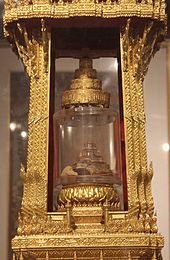
The focal point of this gallery is the display of the relics believed to be of Lord Buddha. In 1898, an excavation was carried out on a mound at Piprahwa, in Uttar Pradesh, which yielded caskets with fragments of bone, along with ornaments, figures and precious stones. The inscription on a casket speaks of the relics of Lord Buddha. The Archaeological Survey of India conducted further excavations at the site from 1971 to 1977, resulting in the discovery of two more caskets in soapstone, containing more sacred bone relics. The site has been identified with ancient Kapilavastu, the home town of Buddha Sakyamuni. These objects are of great reverence to Buddhist pilgrims, and the Museum gets hundreds of visitors of Buddhist faith from all over the world who come to this room to pay homage and venerate the relics. 

(Source : http://www.nationalmuseumindia.gov.in/departments-archaeology.asp?lk=dp2#Buddhist)


The Buddhist Art Gallery was set up in 1990 as the first thematic gallery of the museum. All the three major schools of Buddhism – Hinayana, Mahayana and Vajrayana - are represented here. The gallery presents a large number of images of Buddhist deities. Important Buddhist

sites like Sarnath, Nalanda, Bharhut and  Nagarjunakonda are also represented  in the gallery. The larger than life image of the Buddha head from Java is an impressive sculpture in this gallery. Tibet and Nepal are represented here by Thangkas (scroll- paintings) based on Buddhist themes. A modern Buddha image in wood with gold wash from Myanmar is an added attraction.


Located on the corner of Janpath and Maulana Azad Road in Central Delhi, nearest Metro station is Central Secretariat on the yellow line. The nearest airport is New Delhi International Airport which is 20 km from the place. 


2. Buddhist Vihara, Mandir Marg (Delhi Center)

Delhi, a city of mighty kingdoms, historically relates to the most inspirational Sutta (discourse) of Maha Satipatthana preached in its vicinity by the Buddha himself. Stone inscriptions by Emperor Ashoka (3rd century B.C.) still resonate the teachings of the Enlightened one in the heart of Delhi, the capital of modern India. As per historical records even King Kanishka (2ndcentury A.D.) also attempted to establish Buddhist teachings in Delhi.

The first Buddhist Temple in Delhi was constructed by the great philanthropist Raja Seth Jugal Kishore Birla on a land offered by the British Viceroy of India. The foundation stone was laid by K. Yonewaza, the Japanese Consul General in India in 1931 and was reverentially opened by Mahatma GANDHI in 1939 before Independence of India. It was handed over to Mahabodhi Society of India for its upkeep and 
Ven. Ariyavansa Nayake Mahathero
day to day management.  Frequented by Bengali Buddhists of undivided India and devotees of Asian Buddhist countries, it was the epicenter of all Buddhist activities for a very long time after India got its freedom from the British rulers. Renowned Buddhist Monk from Bengal, Ven. Ariyavansa Nayake Mahathero (1915-1994) successfully led the Buddhist revival path in the capital through his activities from this temple.

This Center is located on Mandir Marg (Road) in the heart of the city. It is adjacent to New Delhi’s famed Lakshmi Narayan Temple, which is well-known as Birla Mandir. The nearest airport is New Delhi International Airport which is 16 km from the place. The nearest metro station is Patel Chowk on the Yellow Line.

Birla Mandir
The auspicious Days of Buddha Dharma are celebrated with great enthusiasm and devotion. In these religious ceremonies, almost all of the former Prime Ministers, President, great leaders of India such as Dr. Rajendra Prasad, Pandit Nehru, Dr. S. Radhakrishnen, Morarji Desai and the architect of the Constitution of India – Dr. B. R. Ambedkar, Sri Lal Bahadur Shastri, Mrs. Indira Gandhi, Dudley Senanayaka, Mr. & Mrs. S.W.R.D. Bandaranayake, J.R. Jayawardane (Sri Lanka) and many other Prime Ministers, Presidents, High Commissioners and Ambassadors of foreign countries including Sri Lanka, Japan, Korea, Thailand, Burma, etc. took part on various occasions.

The Buddha Vihara houses a beautiful gold polished Buddha statue in dhammapavatana mudra beside  another exquisite Buddha murti of Burmese origin within a highly decorated frame with beautiful picture of Buddha gifted by Pandit Jawaharlal Nehru – the first Prime Minister of India. 
(source: http://www.mahabodhivihara.com/about/)


3. Ladakh Buddha Vihara 


The Ladakh Buddhist Vihara is situated in Civil Lines, Delhi. It is located bang opposite the Inter State Bus Terminus (ISBT) and better known as the Monastery Market as the entrance to the place is through a market that is always crowded. A left turn from the market end takes one to Buddha Vihara, where the monastery is situated. The entrance of the shrine is marked by fluttering colourful Tibetan prayer flags, a statue of Jawaharlal Nehru and Kushok Gyalsras Bakula, who is an important religious as well as political figure for the Ladakhi community.

The interior of the monastery reflects the artistic skills of the Ladakhis and Tibetans. A large statue of Lord Buddha at the centre is kept and the walls are adorned with large paintings that depict various stories and myths related to the life and times of Lord Buddha. The nearest metro station is Kashmere Gate on the Yellow Line.


4. World Buddhist Center


There are several Buddhist centers in New Delhi but the World Buddhist Center stands out from them all because of its amazing ambience and the high quality information they provide about Buddhism to those who are interested in knowing more about this religion.


World Buddhist Center is located at  East of Kailash in South Delhi and is a popular destination among tourists and locals who follow Buddhism or are interested in knowing more about Buddhism. It is a non-sectarian Buddhist place of worship which was established in 1996 under the guidance and direction of Nakamura Gyomyo.

Bhikshu Nakamura Gyomyo
The temple has emerged as the favorite destination of those looking for place where they can pray peacefully in a serene setting. The temple is open to everyone irrespective of religion or the faith they follow. Visitors can gain knowledge about Buddhism from the residential spiritual consultant. Buddhist studying facilities are also available at the center through a full-fledged library where English and Japanese literatures are stocked in abundance.

The temple inside the center has specially designated space for meditation and yoga. Prayer services are held every morning and evening where visitors can meditate or get their queries on Buddhism answered by the resident monk. It is 14 km from New Delhi Railway Station and 5 km from Nizamuddin Railway Station. The nearest airport is New Delhi International Airport which is 16 km from the place. The nearest metro station is Kailash Colony on the Violet Line.


5. Tushita Mayahana Meditation Centre


Tushita Mahayana Meditation Center is a place where devotees come to study and practice Buddhism based on the Mahayana tradition. The center has been established with the aim of providing a friendly, serene environment to people, irrespective of their nationalities, background, religion and caste. Tushita literally means ‘The Place of Joy’.

Ven. Lama Thubten Yeshe & His Holiness, Dalai Lama

It was established in the year 1979 by the late Ven. Lama Thubten Yeshe. It is located in the Padmini Enclave of the famous Hauz Khas area of New Delhi in India. His Holiness, Dalai Lama, the spiritual leader of Tibet is also one of the leading spiritual guides of the center.

The serene atmosphere inside and around the center provides the ideal setting for people to look deeper into their heart and mind and find inner peace and clarity. Many great spiritual Masters of the Tibetan Buddhist tradition visit Tushita regularly to enlighten and inspire people with their spiritual thoughts and teachings. The center organizes spiritual discussions and group meetings on a regular basis. Visitors to the center can enhance their knowledge about Buddhism and Buddhist teachings by reading through over 1000 titles on the subject in the Buddhist Library situated in the center.


Guided meditation programs are conducted every Monday and Thursday evening for beginners as well as students of any level of experience. The center screens movies based on Buddhism and spiritualism every Saturday. Evenings at the medication center are reserved for pujas. 

The Tushita Mahayana Medication Center is located in the popular and easily reachable Hauz Khas area of New Delhi. There are local buses, cabs and autos available from many places in New Delhi to reach the center. The nearest metro station is Hauz Khas on the Yellow Line. Indira Gandhi International Airport is just 10 kms from the center.


6. Vishwa Shanti Stupa (World Peace Pagoda)


The Shanti Stupa Society was established to build the Vishwa Shanti Stupa (World Peace Pagoda) in the Indraprastha Park in the heart of the City of Delhi. The purpose of the Shanti Stupa is to provide a “peace haven” for all and to develop programs that promote peace-building efforts all over the world with an emphasis on ahimsa, or nonviolence. (http://shantistupa.org/)


Vishwa Shanti Stupa, New Delhi was Inaugurated on November 14, 2007 by His Holiness The Dalai Lama. Built in Indian style, the Stupa is 30 metres high and has a diameter of 37 metres. Accessible to the physically challenged, it is  surrounded by a beautiful garden.

The Shanti Stupa has become a symbol of universal peace and acceptance over the centuries. Nipponzan Myohoji was founded by Most Venerable Nichidatsu Fujii (1885-1985) with the mission of building Shanti Stupas all over the world as a way of creating peace and transforming people’s mind and heart. This order has built more than eighty Shanti Stupas all across the globe. The Shanti Stupa Project envisioned by Fujii Guruji in 1978 soon after he received the Jawahar Lal Nehru Award for International Understanding by the Government of India in recognition of his work. Relics and Sacred Objects for this Stupa were donated by His Holiness the Dalai Lama, the President of Sri Lanka, the President of Mongolia, and the Prime Minister of Nepal.

World Peace Pagoda is located in the heart of the City of Delhi at Indraprastha park (Millenium Park) midway between Pragati Maidan and ISBT Sarai Kale Khan and has become a symbol of universal peace. The nearest metro station is Indraprastha Station  on the Blue Line.


7. Buddha Jayanti Park 


Buddha Jayanti Park is one of the most beautiful and popular parks in New Delhi, and was established to celebrate the 2500th anniversary of Gautama Buddha’s enlightenment. With large green spaces, lakes, colourful flowers and the chirping of birds and crickets, Buddha Jayanti Park is the perfect spot for those searching for peace in the city. 


A sapling of the Bodhi Tree from Sri Lanka was planted here by the then Prime Minister of India Shri Lal Bahadur Shastri on 25 October 1964. 


Each year in May on Vaisakha Full moon day the Buddha Jayanti festival is celebrated here with participation by different sects of Buddhism.

Buddha Jayanti Park is situated at the Delhi Ridge approachable from the Ridge Road, Shankar Road or Sardar Patel Marg.  As a token of gratitude of Tibetan people, a gilded Buddha statue was installed on an island in the waterway system and placed on a square platform surrounded by a circular stone fence and a circumambulatory path, called Parikrama. This is a low embarkment, lined with coloured stone rings, each colour representing elements as defined in Kalachakra Mandala where yellow stands for earth, white for water, red for fire, black for air and green for space. It was dedicated to the people of India by the 14th Dalai Lama  in October 1993.

The statue of copper gilded with gold and eight feet tall has been created in the traditional Tibetan style by Mr. Pemba Dorjee, a master craftsperson from Dharamsala.Dharanis – meditation verses - from the scriptures were placed in hollow parts of the statue.


Sitting on a lotus pedestal in the bhumisparsha (touching the earth) mudra, the figure rests on a throne showing an engraving of Bhumidevi, the earth goddess. She symbolizes Mother Earth pleading for her children‘s alertness - an appeal to our responsibility for the earth, as HH the Dalai Lama interprets it.

The nearest metro station is Rajendra Place on the Blue Line and also Dhaula Kuan on the Airport line. Indira Gandhi International Airport is just 5 kms from the Park.
source: 
1.http://www.tibethouse.in/content/installation-buddha-statue-buddha-jayanti-park
2.https://en.wikipedia.org/wiki/Buddha_Jayanti_Park,


8. Jaggajyoti Buddha Vihar


Located at the far end of Aastha Kunj near Nehru Place and just beside famous  ISKCON temple, this is an important place of worship for Theravadins particularly Barua Buddhists of Northern India. Established in 1956, it is run by Jaggajyoti Vihar Sabha, predominantly consisting of Bengali Buddhists, also known as Barua Buddhists (whose native place is Chittagong in Bangladesh). The discovery of Ashokan edict nearby in March, 1966 gave fillip to the laying of foundation stone of the temple simultaneously by Dr. Nguyan Trieu Dan, the then Consulate General of Vietnam.


The old temple building has been recently remodeled on the famous Mulagandha Kuti Vihar of  Sarnath and is one of the biggest Buddhist temple in Delhi. The entrance to the temple complex is through the replica of the famous Gate of Sanchi Stupa. On the far  left you will find an very old Bodhi Tree and on the right the main Prayer Hall.  The complex has three Buddha Statues with one of them being a single rock marble statue in the famous Parinirvana Mudra (Nibbana Sajja)of the Buddha. It also has a statue of famous Bengali Buddhist Monk Ven. Anandamitra Mahathera under a elegant canopy.  A separate two storey building with basement  houses an air conditioned Meditation Hall and a new guest house and a community function hall. The meditation hall can sit 50 to 70 practioners. The atmosphere all around is apt for a quiet prayer or meditation.

Thousands of devotees take part in the biggest celebration of Buddha Purnima and Kathina Civara Dana (Buddhist festival of Holy Robes Offering to the holy Bhikkhu Sangha,usually held in November) in Delhi every year in the Vihara amid chanting of prayers by Buddhist monks and laities. Besides the Buddhist days of Ashadi Purnima , Maghi Purnima, Pravarana Purnima, many other pious days are observed regularly here. The Bengali New Year called ‘Poila Boisakh’ is celebrated in a very traditional way and a large number of people participate in these activities.  

Ashoka rock or edict is just one km from here. The nearest metro station is Kailash Colony on the Violet Line and Indira Gandhi International Airport is just 18 kms from the temple.

9. Ashokan Edicts


Emperor Ashoka the Great, more than 2000 years ago, ruled the entire Indian subcontinent with great compassion. The story of his transformation from a war mongering conqueror to an ambassador of peace is stuff of folklores.  Apart from his teachings and ideology, he has left an array of tangible physical heritage that keeps us reminding of that era. The very national emblem of India, the Sarnath Lions and the Chakra are also his gifts to the nation.


Among other things, Ashoka had left a lot of stone edicts expressing his thoughts and philosophy. They are scattered all over the subcontinent and Delhi is no different. However, the history of the Ashokan Edicts is somewhat amusing. Two major edicts in Delhi are the Ashokan pillars of Feroz Shah Kotla and Hindu Rao Hospital but they were actually erected in other places and Emperor Feroz Shah Tughlaq had them brought to Delhi and established them where they are today. 


This leaves us with the rock edicts that were never moved and so, can be originally claimed by Delhi. One of the better maintained Ashokan Rock Edict in Delhi is in Greater Kailash. It was discovered in Delhi in 1966.

The edict in question is (now surrounded by a park) is at the top of a  hillock . It has been reasonably developed into an interesting park by Archeological Survey of India, covered with natural Aravali rocks but probably the entire location was a small rocky hillock earlier. 

The edict is protected with a very crass concrete shed with grills. It just ruins the aesthetics and also there is no way to get a closer view of the actual edict. As for the edict itself, it is fading and the inscriptions are unintelligible. 

The inscriptions are written in Prakrit, a colloquial language used in everyday speech during Ashoka’s reign. The edicts were intended to teach the people of the morals and ideals of civilised living, to bring peace and harmony to the vast empire. The philosophy bears a striking resemblance to the teachings of the Buddha, which his followers believe lead to enlightenment (the universal law of nature), and the constituent elements of the world as it is experienced (the characteristic of elements). 


It is located in the Srinivaspuri locality between Kailash and Kalkaji. The easiest way to find it is to locate the ISKCON temple which should be known to everyone. Once you locate it, just keep walking eastwards through the same road crossing the Deshraj Campus and after a while you should locate the park. The nearest metro station is Kailash Colony on the Violet Line and. Indira Gandhi International Airport is just 16 kms from the Park.


10. Karmapa International Buddhist Institute


KIBI is situated in the south of New Delhi, in the peaceful Qutab Institutional Area. It is an ideal location for KIBI, which aims to combine the best of both the ancient Buddhist and modern scholarly traditions. KIBI is housed in a beautiful four-storied building constructed in a Tibetan architectural style. It overlooks the greenery of Sanjay Van, a large forested park facing the distant Qutab Minar. The main building houses the large Buddhist shrine hall with a newly installed air conditioning and sound system, an auditorium, and five lecture halls. It also contains a well-equipped Buddhist library, administrative offices and a lounge. 

The Karmapa International Buddhist Society (K.I.B.S.) from Youtube


Lhakhang (gompa)  — shrine and meditation hall:


Every day in the morning at 6 am and in the afternoon around 4 pm there are pujas in the Lhakhang. Everyone is welcome to attend. In addition, the Lhakhang is open for personal practice from 6 am till 10 pm. It is also open to visitors from 9 am till 6 pm during the weekends.


In front of KIBI you will find a World Heritage listed park, “Sanjay Van”. This is a large forested park facing the distant Qutab Minar. There are plenty of wild animals living there such as peacocks, foxes, squirrels, parrots, a few wild pigs and even antelopes. It is worth visiting this park, but if you want to do so, please make sure you go in groups of at least three people, since there have been violent attacks on visitors there in the past. The Institute is surrounded by the Indian Institute of Foreign Trade, the Fore School of Management, and the Shri Lal Bahadur Shastri Rashtriya Sanskrit Vidyapeetha.

The nearest metro station is Hauz Khas on the Yellow Line. Indira Gandhi International Airport is just 10 kms from the center.
(www. kibi-edu.org)


The other Buddhist attractions are :


  1. Tibet House, the cultural centre of H.H. The Dalai Lama,Lodhi Road, New Delhi.
  2. Ashoka Mission, one of the oldest Buddhist temple in Mehrauli,near Qutab Minar.
  3. Bhogal Buddhist Temple, a temple frequented by Thai residents of Delhi in Bhogal near Jangpura.
  4. Combodian Monastery is located just next to Dastkar Haat (Andheria More) near Chhattarpur Metro Station on the yellow line.